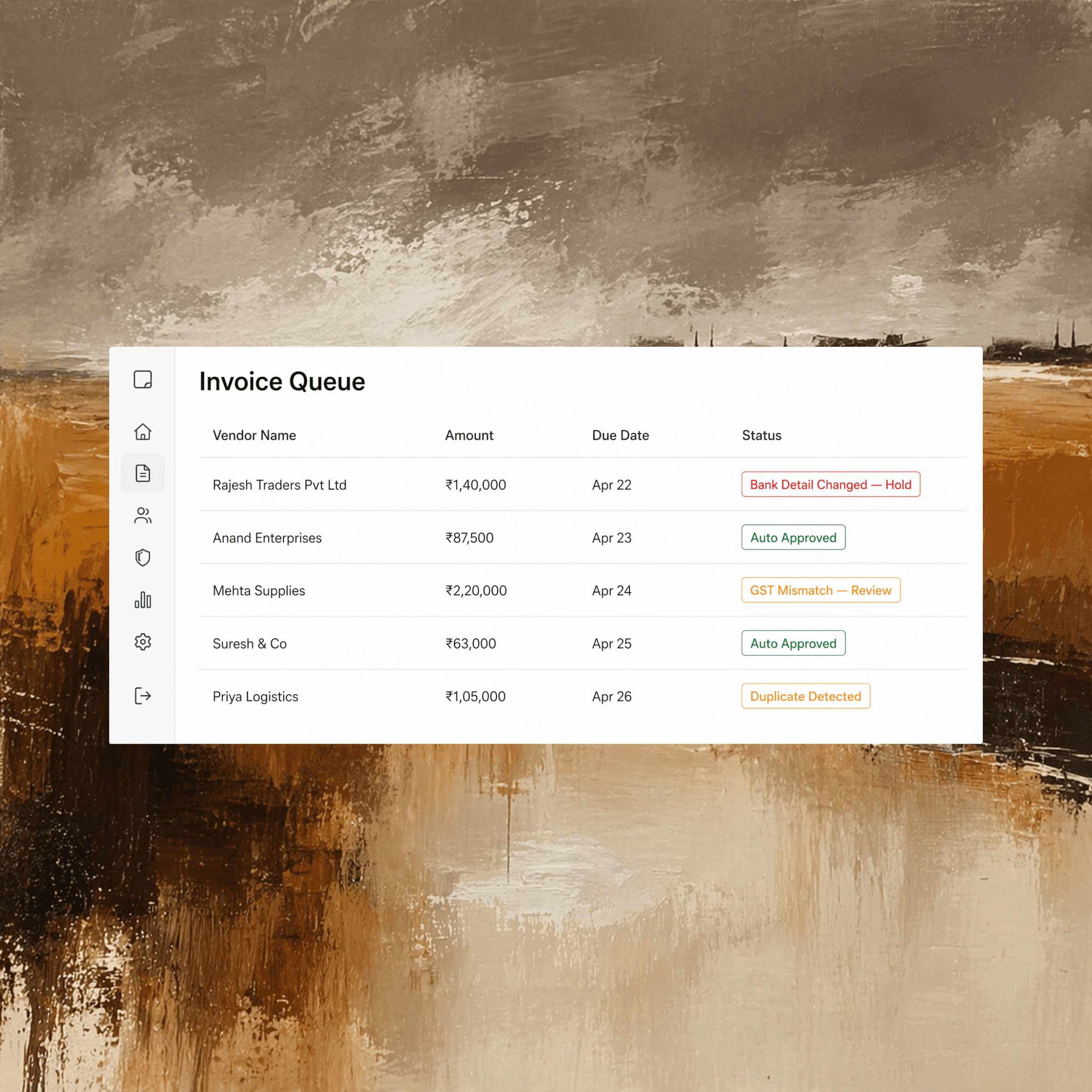
How AP Automation Protects GST ITC: From Invoice Validation to GSTR-3B
Every invoice that bypasses validation is a potential ITC block. Here's how automated AP protects input tax credit from vendor onboarding through GSTR-3B filing.
Verse HQ
A logistics company with 215 active vendors processes ₹18 crore in AP monthly. Their finance team discovered that 12% of their vendors — 26 suppliers — consistently filed GSTR-1 after the 11th of each month. For 11 months, ITC associated with those vendors' invoices was being deferred to the following filing period. The cumulative ITC timing gap was ₹1.2 crore per year — not lost, but effectively unavailable for working capital because nobody had identified the pattern early enough to act on it. Automated ITC protection identified those vendors by month 2 and changed the payment release process accordingly.
The ITC Protection Chain
ITC does not protect itself. It requires active management across five stages, and each stage has a failure point that automation closes.
Vendor GSTIN monitoring at onboarding and continuously. A GSTIN check at onboarding confirms the vendor is registered. It does not confirm they will stay compliant. Automated monitoring re-verifies GSTIN active status before each payment run. A vendor whose registration has been suspended or cancelled triggers a flag before payment is released — not after.
IRN validation at invoice receipt. For mandated suppliers (₹5 crore+ turnover), a valid IRN is the strongest ITC protection signal available. Automated validation checks the IRN format, cross-references against the IRP, verifies the QR code authenticity, and confirms the 30-day upload window for high-turnover suppliers. Invoices that fail IRN validation do not enter the approval queue — they go into an exception queue with the specific failure reason.
GSTR-2B auto-reconciliation. Instead of a finance team member downloading the GSTR-2B PDF on the 14th and manually comparing it against a purchase register in Excel, automated reconciliation runs the match continuously. Every invoice in the purchase register is compared against GSTR-2B entries daily. Gaps are flagged with the specific vendor, the specific invoice, and the reason for the gap (not filed, filed late, wrong GSTIN).
Delayed-filer identification before month-close. By tracking GSTR-1 filing dates over time, automation builds a behavioral profile for each vendor. The finance team sees, by the 5th of each month, which vendors' invoices are at risk of not appearing in GSTR-2B for the current period. For high-risk vendors, the payment release process requires GSTR-2B confirmation rather than just invoice validation.
IMS action management. The Invoice Management System dashboard accumulates pending items that require Accept/Reject decisions. Automation surfaces IMS pending invoices with the full invoice context — amount, vendor, ITC at risk — and flags items approaching the filing deadline. This turns a potential 200-item backlog on the 13th into a managed workflow.
What the ITC Protection Value Looks Like in Numbers
For a company processing ₹15 crore in monthly AP with 18% average GST rate, the ITC pool is approximately ₹2.7 crore per month. If 8% of that pool is at risk of blocking due to vendor non-compliance and filing delays, that is ₹21.6 lakh in ITC that could be deferred or lost per month without active management.
At 18% interest on reversed ITC claims, the cost of a ₹21.6 lakh block for one quarter is approximately ₹97,000 in interest alone. Across a year, with compounding, the interest cost of unmanaged ITC blocks can exceed ₹3 lakh for a company at this AP scale — separate from the cash flow impact of the deferred credits themselves.
The ITC protection value of AP automation is measurable in two ways: the blocked credits you do not lose, and the interest on reversals you do not pay. Both are recoverable amounts that appear directly in the working capital position.