Cash Flow Forecasting for Indian CFOs: Why AP Data Is the Most Underused Input
Most Indian CFOs forecast cash flow from bank statements and receivables. The AP pipeline — approved invoices not yet paid — is the most predictive input they're ignoring.
Verse HQ
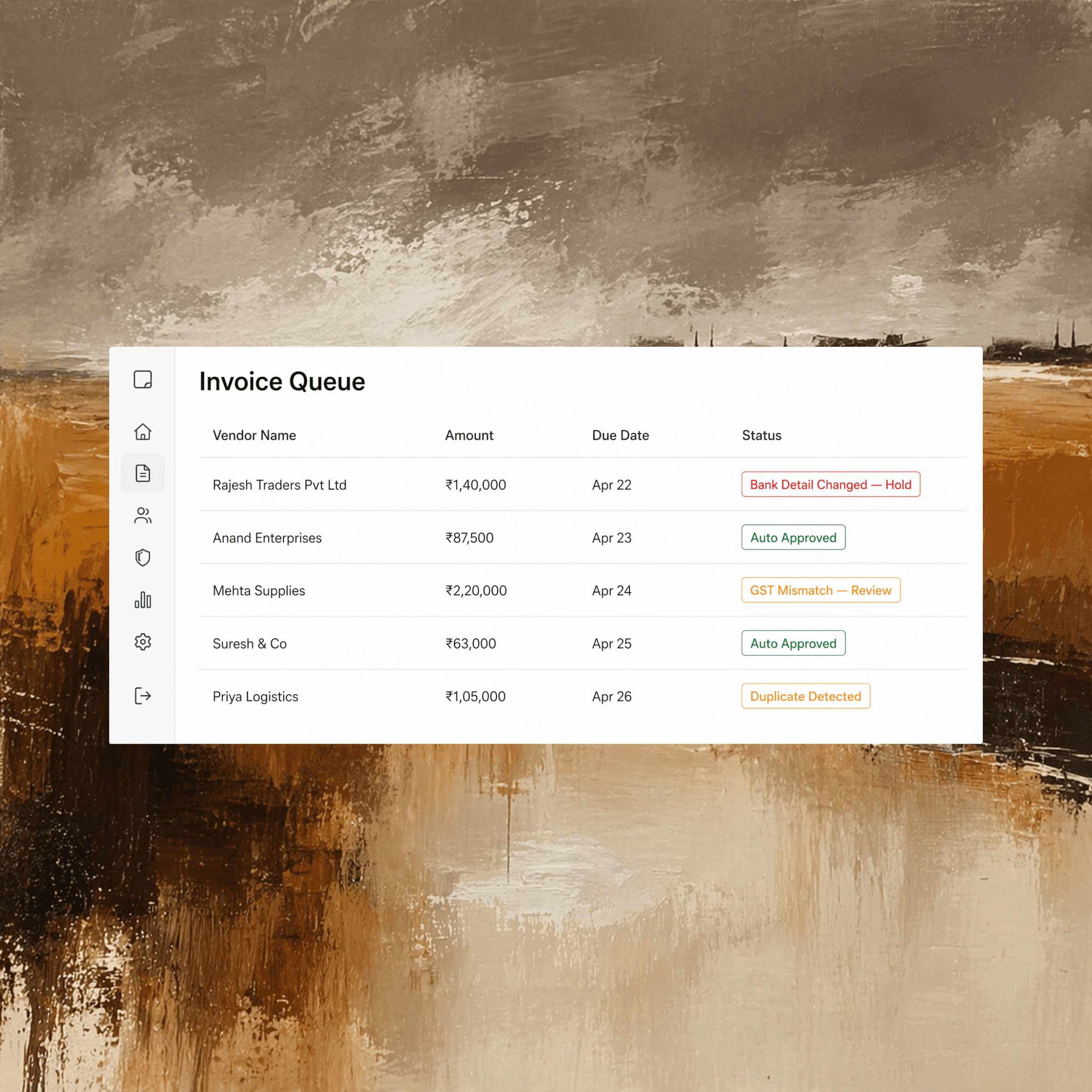
If you asked your CFO right now for the company's cash position in 30 days, they would pull the bank balance, estimate receivables, and calculate the payroll and tax obligations. What they would probably not include: the 340 invoices that have been approved for payment but not yet released, with payment terms ranging from Net-30 to Net-60, totaling ₹4.2 crore in committed outflows. That approved invoice queue is the most accurate predictor of short-term cash requirements — and most Indian CFOs are not using it.
Why the AP Pipeline Is the Best Forecasting Input
Cash flow forecasting relies on predicting future inflows and outflows. Inflows from customers are uncertain — payment terms are estimated, customer behavior is variable, collections are unpredictable. Bank statement data is accurate but lagging — it tells you what happened, not what is about to happen.
The approved AP invoice queue is different. For every invoice in the queue, you know the amount, you know the vendor, and you know the payment terms. An invoice for ₹8.4 lakh from a vendor on Net-45 terms was approved on June 1st — that is a predictable outflow on July 16th. Aggregate all approved invoices by their expected payment date and you have a cash requirement schedule that is more reliable than any projection model built from historical averages.
For Indian mid-market companies, this AP pipeline visibility is particularly valuable because of the GST payment cycle. Every month between the 20th and the 28th, GST payments go out — CGST, SGST, and IGST based on the GSTR-3B liability. This is a large, predictable outflow that can be calculated from the AP data and the ITC position before the filing date arrives. CFOs who model GST outflows explicitly — accounting for ITC availability and timing gaps from non-compliant vendors — have materially better cash position forecasts than those who estimate it as a fixed monthly expense.
What Mid-Market Finance Teams Are Actually Doing
Most Indian mid-market finance teams build cash flow forecasts by pulling data from the ERP into a spreadsheet, reconciling manually across accounts, and presenting numbers that are already three to five days old by the time the CFO reviews them. The spreadsheet does not include the AP invoice queue because that data requires a separate pull and a manual mapping exercise. The GST component is estimated based on last month's payment rather than the current GSTR-3B liability.
The result is a forecast that is directionally useful but imprecise enough that the CFO relies on banking relationships rather than planning when cash gets tight. A ₹1 crore overdraft facility that gets drawn on monthly is often covering a forecasting gap, not a genuine cash shortage.
What Changes With AP Data Integration
A cash flow forecast built on real AP pipeline data changes the planning horizon. Instead of a best-estimate number for the next 30 days, the CFO has a schedule: ₹X in approved invoices due in the next 7 days, ₹Y due in days 8–14, ₹Z due in days 15–30, with the GST payment modeled separately from operational payables.
This level of visibility allows earlier decisions: if the 14-day window shows a ₹80 lakh payment cluster that will strain the current balance, the CFO can decide now whether to delay some payments, accelerate collections, or draw on the working capital facility — rather than discovering the gap on day 11.
The AP data for this forecast already exists. Every approved invoice is in the ERP with an amount, a vendor, a payment term, and an approval date. The barrier is not data availability. It is the step that connects the AP queue to the cash flow model, which in most mid-market companies requires a manual export and a manual calculation that nobody has time to do during month-close.