Behavioral Signals in Accounts Payable: What Implicit Data Reveals About Vendor Risk
The invoice amount is explicit. The fact that the template changed, bank details differ, and it arrived 17 days late in the cycle — those are behavioral signals. Here's what they mean.
Verse HQ
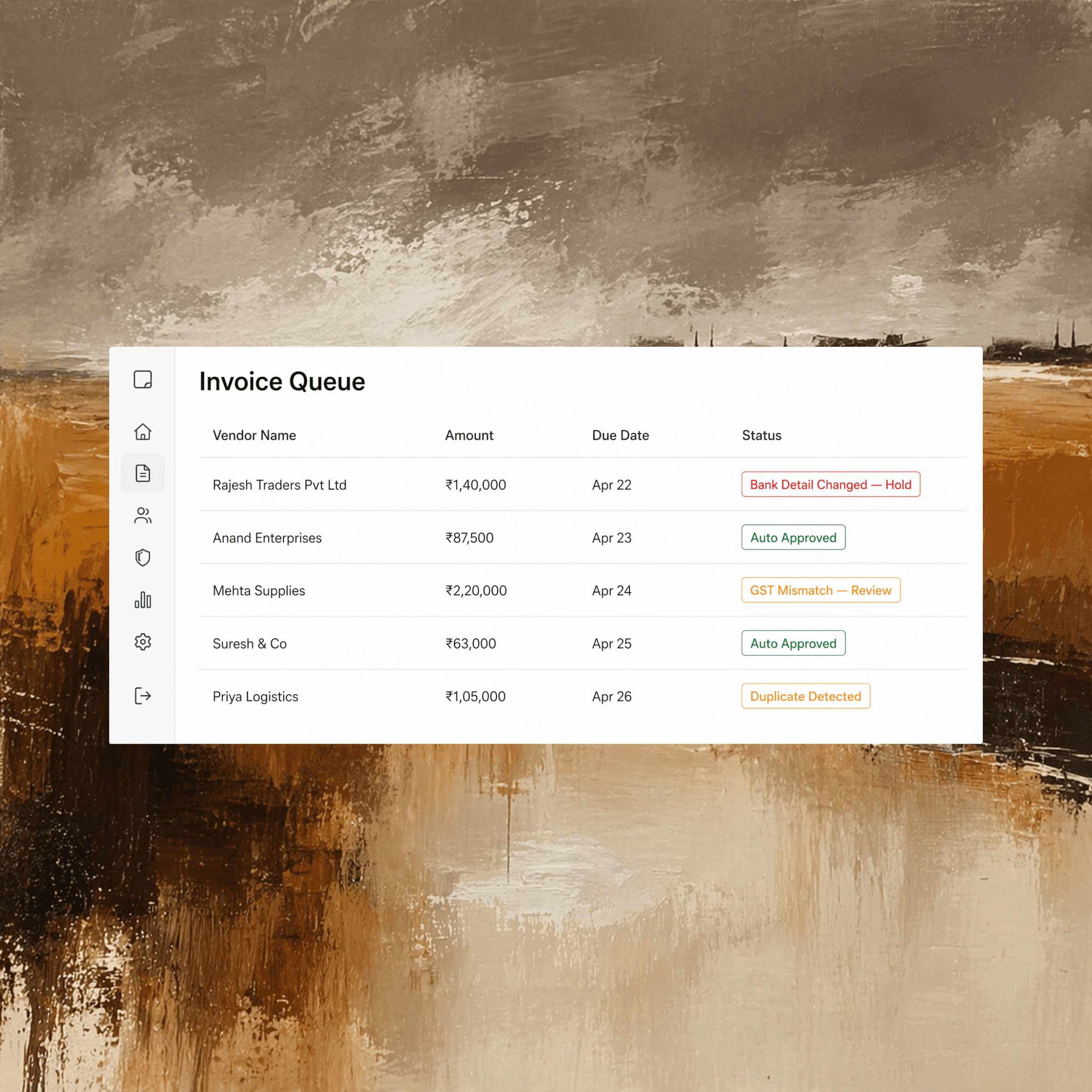
An invoice arrives from a vendor your company has worked with for three years. The invoice number follows the expected sequence. The GSTIN is correct. The amount is reasonable. Your AP team approves it within the day. What the approval process did not check: this vendor always invoices on the 5th of the month. Today is the 22nd. The invoice template is different from the last eight invoices. The bank account number is new. The email came from a domain registered 11 days ago.
No single one of these observations would block the invoice. Taken together, they represent a behavioral pattern that strongly indicates the invoice is not from your actual vendor. This is the difference between explicit signals and implicit signals in AP.
Explicit vs Implicit Signals
Explicit signals are printed on the document: invoice number, date, amount, GSTIN, bank account, HSN codes. Every AP system reads these. They catch format errors, obvious duplicates, and missing required fields.
Implicit signals come from context and behavioral patterns: when the invoice arrived relative to the vendor's normal billing cycle, whether the invoice template changed, whether the bank details differ from the last 12 invoices, whether the email domain matches the vendor's known domain, whether the invoice amount is unusual relative to this vendor's typical range.
No incumbent AP system tracks implicit signals systematically. This is where fraud and behavioral risk actually hide — not in the explicit fields that get checked, but in the pattern of behavior that changes when something is wrong.
Four Categories of Implicit Signals Worth Tracking
Billing cycle timing. Most vendors follow a predictable invoicing rhythm — monthly, fortnightly, or after each delivery. An invoice that arrives significantly outside that cycle is worth examining. A rush payment request from a vendor who normally invoices at month-end is an operational flag. A large invoice arriving just before a quarter end from a vendor with no significant prior quarter-end activity is worth scrutiny.
Template and format changes. A legitimate vendor rarely changes their invoice template. When they do, it is usually for a visible business reason — rebranding, new CA, accounting software change. When a template changes at the same time as bank details change, the combination elevates the risk level considerably. Document fingerprinting — tracking the structural signature of invoices rather than just the content — catches this.
Bank detail drift. Every invoice carries bank details. Comparing those details against the vendor master and against the last 12 invoices from the same vendor is a two-second check that catches the most common fraud vector in Indian AP. A new bank account number is not automatically suspicious — vendors do change banks. But a new account number appearing for the first time on an invoice that also arrived outside the normal billing cycle, with a different template, from a new email domain — that combination is not a coincidence.
Volume and amount patterns. A vendor whose invoice amounts have been growing 8% per month (not per quarter — per month) is worth examining, even if each individual invoice stays within your approval tolerance. A vendor who submits three invoices in a week when they normally submit one per month may be managing cash flow pressure — or something else.
Why Implicit Signals Matter in Indian AP
The explicit checks that standard AP systems run are necessary but not sufficient. An invoice that passes all explicit checks but carries four anomalous implicit signals is more suspicious than an invoice with a minor field-level error. The explicit checks catch mistakes. The implicit signals catch intent.
Forensic AP platforms that track behavioral baselines over time — building a signature of what "normal" looks like for each vendor — can flag deviations that would never appear in a field-level validation check. The pattern that matters is not "this field is wrong." It is "this vendor has never behaved this way before."