From AP Team to Finance Intelligence: What Changes When Matching Becomes Automatic
When 97% of AP decisions are automated, finance teams stop processing and start thinking. Here's what the questions change to — and why CFOs want this shift.
Verse HQ
A finance team that processes 600 invoices per month manually spends roughly 55–65% of its capacity on AP work: data entry, matching, reconciliation, exception resolution, vendor follow-up, compliance filings. When that AP work is automated, the team's capacity does not disappear. The question is what it shifts to — and whether the organization is ready for it to shift.
The transition from AP processing to finance intelligence is not automatic. It requires the CFO to change the questions they ask of the finance team. And it requires the finance team to have the data to answer those questions — which is only possible when the AP automation is genuinely producing structured, analyzable output, not just faster approvals.
What the 97% Automation Model Means
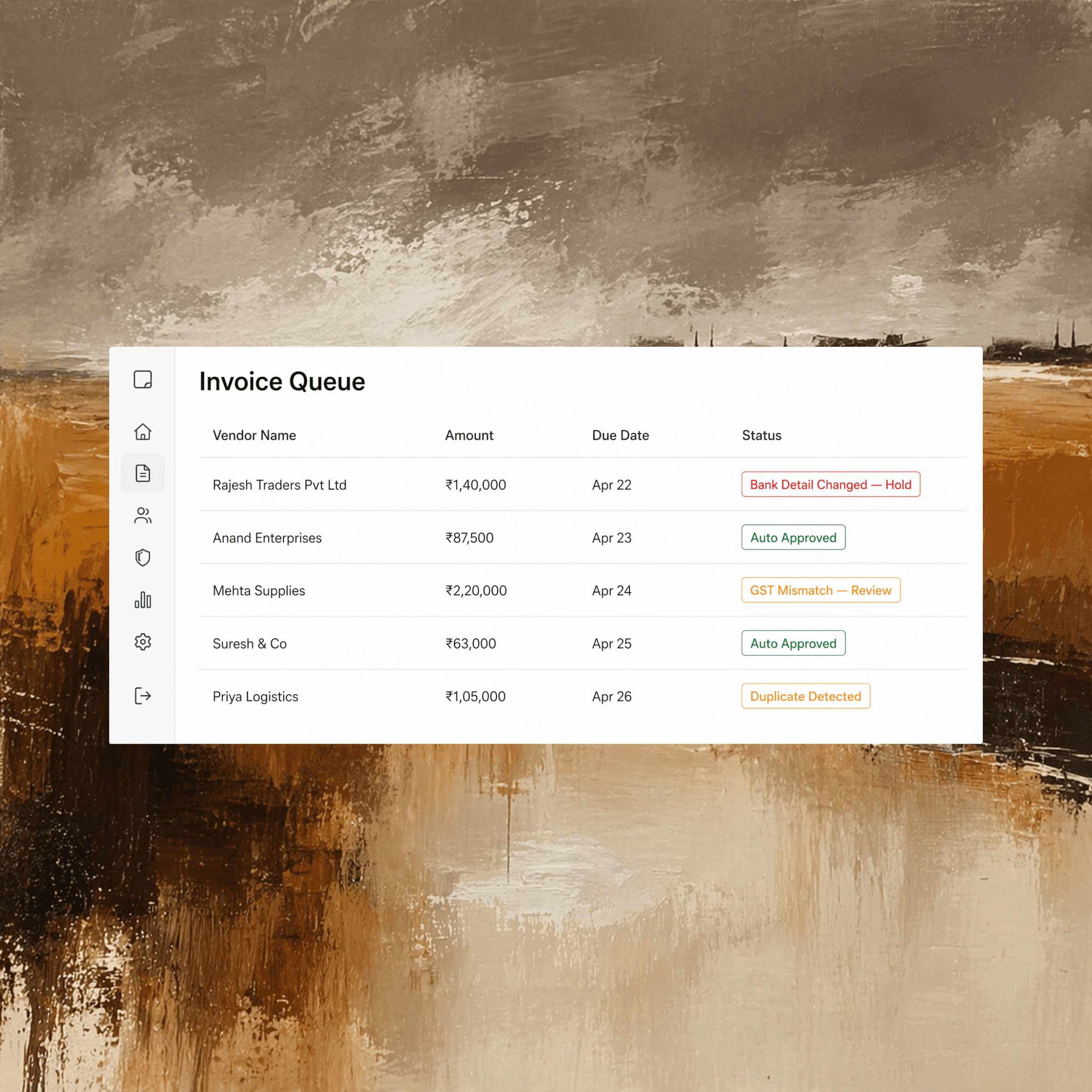
Verse HQ's confidence-tiered processing means that invoices are sorted by how much certainty the system has about their correctness. Invoices with clean three-way matches, valid IRN, correct TDS, no behavioral anomalies, and no contract rate deviations get processed automatically — no human action required. This is the 97%.
The remaining 3% are the genuinely complex decisions: an invoice from a new vendor whose risk profile is not established, a quantity dispute with a vendor whose GRN entry is contested, a contract rate discrepancy that requires procurement's input, a bank detail change that needs out-of-band verification. These go to a human reviewer with the full evidence chain — the contract clause, the GRN confirmation, the vendor's behavioral history — not just the invoice.
When the 97% is off the team's plate, the finance team's time does not move to leisure. It moves to the questions that were always important but never had time allocated to them.
The Questions That Change
In a manual AP model, the questions the finance team can answer are operational: "Is this invoice approved?" "When will this vendor get paid?" "What is our AP liability this month?" These are necessary questions. They are not strategic ones.
When AP processing is automated and the data is clean, the questions available to the CFO change:
Which vendors are systematically billing above contracted rates, and by how much per year? This requires cross-referencing invoice rates against contracts across the full vendor base — a calculation that takes seconds for an automated system and weeks for a manual team.
Which vendors' ITC risk profiles have been deteriorating, and which payment decisions should be conditional on GSTR-2B confirmation? This requires GST filing behavior tracking across the vendor base — data that a continuous monitoring system maintains and a manual team discovers only during month-close scrambles.
Which penalty clauses in our vendor contracts are unenforced, and what is the cumulative recoverable amount? This requires systematic GRN-to-SLA comparison across all vendors with delivery SLA clauses — a quarterly analysis that most finance teams have never run.
What does the AP pipeline predict about cash requirements for the next 45 days? This requires the approved invoice queue to be connected to payment term modeling — a real-time forecast that is always available from automated AP data.
What This Shift Requires
The shift from AP processing to AP intelligence requires three things from the CFO. First, the expectation that the finance team will answer these questions — not just process transactions correctly. Second, an AP system that produces structured, analyzable output rather than just a processed invoice queue. Third, the discipline to rebuild the team's default activities around analysis rather than mechanical matching.
Companies that have made this transition describe a consistent observation: the finance team gets more valuable, not smaller. The questions they can now answer — vendor risk, margin leakage, cash positioning — directly inform procurement, operations, and treasury decisions. The team did not change. The inputs available to them did.