Why Finance Managers Lose Hours to Vendor Payment Disputes — And How to Stop It
Vendor payment disputes in India involve GST reconciliation, TDS certificates, MSME Act timelines, and GRN mismatches. Here's how to resolve them faster.
Verse HQ
Tuesday afternoon: two vendor calls about overdue invoices. The first vendor disputes your TDS deduction — you applied Section 194C at 2%, they believe it should be 0% because they supplied goods, not services. Resolving this requires pulling the original contract, finding the work order, and cross-referencing with your CA's interpretation of the scope. The second vendor says they delivered 200 units on March 14th. Your GRN shows 175 units. They have a signed delivery challan for 200. Your warehouse has a receipt for 175. Both documents are authentic. Both are in different systems. Neither person on the call can see the other's document right now.
Why Indian Vendor Disputes Are Harder to Resolve Than They Should Be
Indian AP disputes are multi-dimensional in a way that adds friction at every step. A single payment dispute can simultaneously involve a GST reconciliation issue, a TDS rate disagreement, a quantity discrepancy, and a MSME payment timeline obligation — with each dimension governed by a different regulation and sitting in a different part of your documentation.
The TDS dispute: Section 194C (contractors, 1–2%) versus 194J (professional services, 10%) is the most common deduction dispute. The correct section depends on the nature of the work, which is described in the contract, not the invoice. Finance teams that map TDS sections at vendor onboarding have this resolved before the invoice arrives. Teams that determine it at invoice processing time get it wrong occasionally, and the vendor's CA will find the discrepancy when they file their income tax return.
The quantity dispute: your GRN records the quantity your warehouse confirmed. The vendor's delivery challan records the quantity they shipped. When these differ, the gap is usually one of three things: goods rejected at receipt without a formal rejection record, delivery in multiple tranches where the GRN captured one tranche, or a genuine counting error. Resolving this requires the delivery challan, the GRN, and ideally a signed receipt from the receiving team — documents that live in different systems and may require a call to the warehouse manager.
The MSME exposure: if your vendor is registered under the MSME Act and the invoice has been outstanding for more than 45 days, you are legally obligated to pay compound interest on the outstanding amount. This applies automatically — you do not need a court order. Many mid-market companies are unaware of outstanding MSME invoices until the vendor raises it, at which point the interest has already accrued.
Where Disputes Are Actually Created
Most vendor payment disputes are not created at the resolution stage — they are created at the invoice entry stage, and then they sit in the system unresolved until the vendor calls.
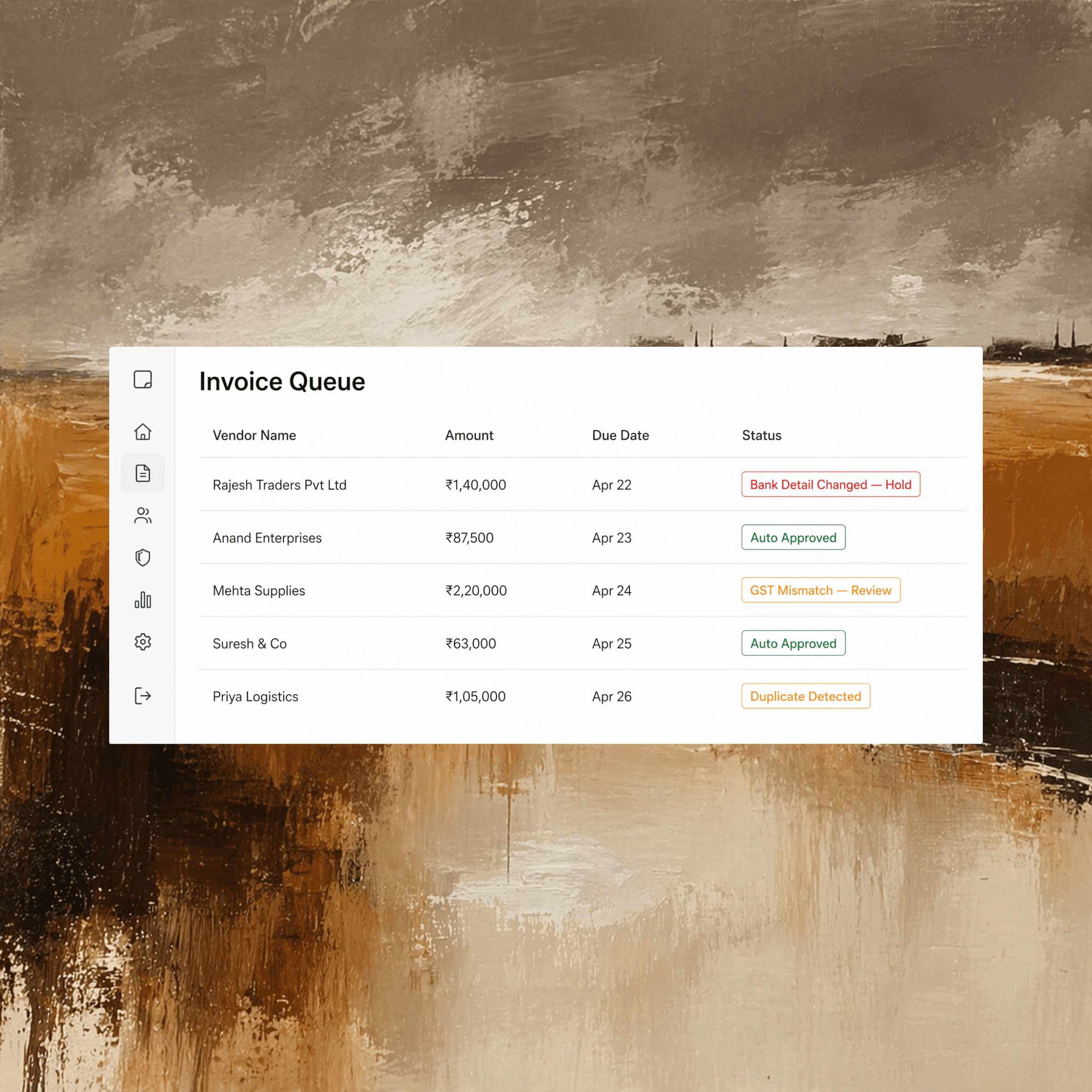
A GRN quantity dispute could have been identified when the invoice arrived and was matched against the GRN. The discrepancy would have been visible: invoice says 200, GRN says 175. Instead of a vendor call on day 45, the exception would have been flagged on day 1, and the resolution process could have started immediately with both documents in hand.
A TDS section dispute could have been prevented by correct section mapping in the vendor master before the first deduction. Once the wrong section is applied for 8 months, the correction process requires amended TDS certificates, possible refund processing, and a CA review of every affected period.
The pattern in companies with low dispute rates: they invest in the entry controls, not the resolution process. Disputes that are identified at invoice processing time are resolved as operational exceptions. Disputes that surface 45 days later become relationship problems. The documentation for resolution is always easier to find immediately after a transaction than six weeks later.