Why Indian Mid-Market Month-Close Takes 8–12 Days (And Where the Time Actually Goes)
Indian finance teams spend 8–12 days closing books each month. Most of that time isn't accounting — it's chasing invoices, GRNs, and reconciliation errors.
Verse HQ
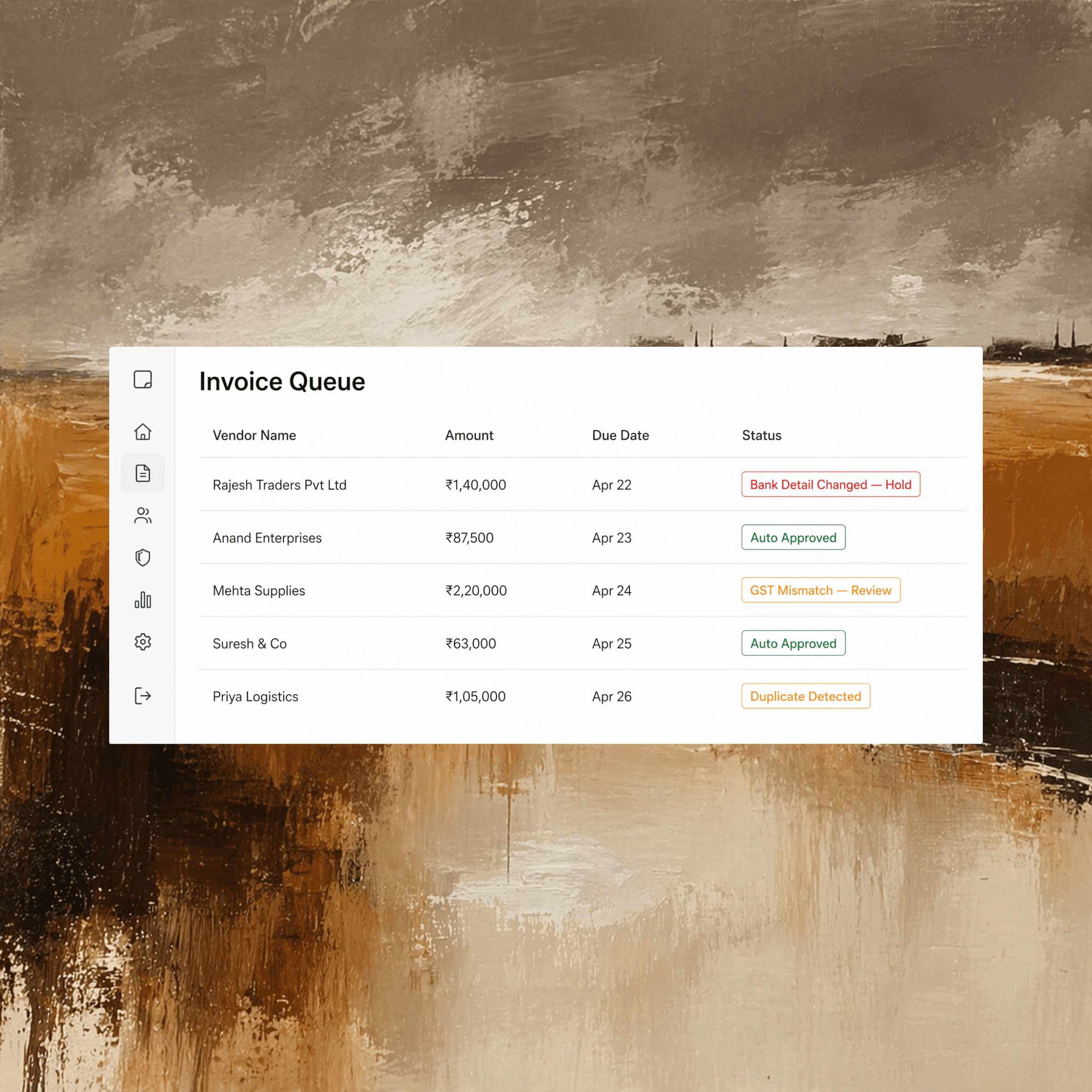
It is day 7 of month-close. Your finance manager has reconciled 340 of 520 invoices. Eighteen are stuck waiting for GRN confirmation from the warehouse team, who are now focused on the next month's dispatches. Twelve have GST mismatches that need to go back to vendors. Three require the CFO's approval, but they are traveling. The remaining 147 are straightforward — they just need someone to type the numbers into Zoho. Day 8 begins the same way. This is not an unusual month.
Where the 8–12 Days Actually Go
Breaking down the month-end close process for a typical Indian mid-market company reveals that most of the time is not spent on accounting. The time goes to pre-accounting work: data retrieval, verification, chasing, and reconciliation.
Days 1–3: Invoice collection and data entry. Invoices that arrived through email, WhatsApp, courier, and the vendor portal all need to be compiled, verified for completeness, and entered. A finance team processing 400–600 invoices per month spends roughly 3 days on this alone. A significant percentage of invoices arrive without the correct GSTIN, with missing IRN, or with illegible GST breakdowns — each exception requires a vendor follow-up.
Days 2–4: PO and GRN matching. The AP team needs to confirm that every invoice has a corresponding approved PO and that the goods or services were actually received as reflected in a GRN. The warehouse team submits GRNs on their own timeline. By day 3 of close, 15–20% of invoices are typically waiting on GRN confirmation that hasn't arrived yet.
Days 3–5: Bank reconciliation. NEFT, RTGS, IMPS, and UPI transactions across multiple bank accounts need to be matched against Tally entries. The narration formats across payment methods are inconsistent, and UTR references don't always align with invoice references in the ERP.
Days 5–7: GSTR-2B reconciliation and ITC checks. Purchase register versus GSTR-2B — the ITC that was expected versus the ITC that actually appeared. Suppliers who filed late, filed with incorrect GSTINs, or didn't file at all all create gaps that need to be investigated before the GST return can be filed.
Days 6–10: Exception resolution and approvals. The invoices with disputes, mismatches, missing documentation, and pending approvals work through the system. This is where most of the variance in close duration comes from — a well-organized team might close by day 8, a team dealing with unusual exceptions might still be reconciling on day 12.
What the CFO Actually Needs to Know
The finance questions that would genuinely help business decisions — which vendors are we overpaying, what is our actual cash position for the next 30 days, which expense categories are running above budget, are there penalty clauses we haven't enforced — almost never get answered during month-close. There is no time left.
A 10-person finance team processing 500 invoices per month spends roughly 60% of their working hours on mechanical matching and data entry. That is the activity profile of a team doing AP administration, not financial analysis.
The path to a faster close is not about the team working harder during the close window. It is about shifting matching and reconciliation work from a monthly batch process to a continuous background process. An invoice that gets three-way matched on the day it arrives does not need to be matched again on day 5 of close. A bank statement that gets reconciled daily does not create a 3-day backlog on day 4 of close.
The companies that close in 3–4 days do the same total work as companies that close in 10 days. They do it every day rather than all at once at the end of the month.